Independent Police Complaints Commission
Blow OutThe Independent Police Complaints Commission (IPCC) is the external oversight body involved after a man dies during a police operation. Its presence makes the operation answerable to an independent investigation as well as internal review, even as Jo is told that criminal proceedings against her are not being considered.
Role in the Aftermath
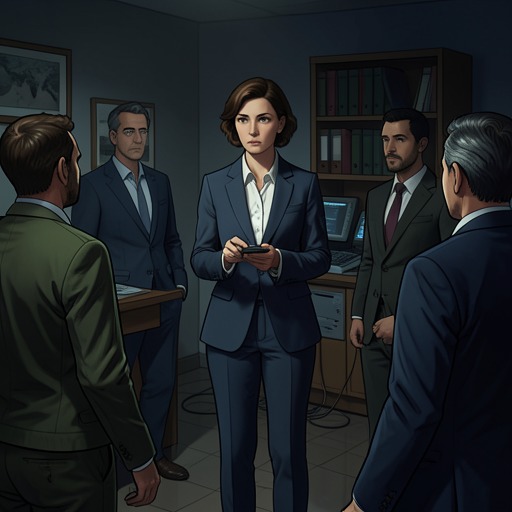
The IPCC is already involved when the first debriefing session begins: a death has occurred during police work, and the commission’s investigation is one of the immediate institutional consequences. Alongside it, the force must prepare an internal review and agree a press release, so scrutiny unfolds on several tracks at once rather than ending with the operation itself.
That formal process runs against Jo’s personal response to the death. She remains troubled by the circumstances in which the man died, and at the debriefing she switches off her phone when Agata calls, leaving the personal conversation to wait while she attends to the collective proceedings. The commission’s investigation therefore belongs to a wider aftermath of professional accountability and emotional strain.
Investigation and Outcome
Later, Agata asks Jo about the status of the IPCC investigation. Jo expects that it may take months and says she has already been told there will be no criminal proceedings against her. She allows that civil proceedings remain possible, but says the man’s father has made clear that he will not pursue that route; the man’s mother has taken the same position.
The outcome is presented as limited rather than conclusive in every respect. Jo anticipates that the investigation may produce recommendations, but doubts there will be serious consequences for her. The decision not to pursue criminal proceedings and the family’s refusal to seek a civil case narrow the likely personal and legal repercussions, while leaving the oversight inquiry itself as part of the operation’s unresolved institutional record.
Narrative Function
The IPCC’s involvement marks a boundary between operational command and subsequent accountability. The police response must be examined after the immediate danger has passed, and Jo’s own account distinguishes the continuing review from criminal proceedings or a civil claim. In this way, the commission extends the story’s attention beyond solving the case to the procedures and consequences that follow a death during police action.